

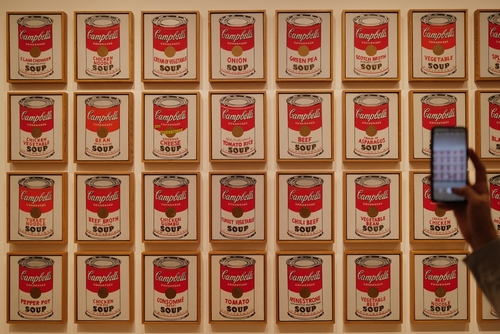
This article is the first in our three‑part series on art and the law, from the complementary expertise of our Family, Contentious Trusts and Probate, and Private Client teams. We advise on every stage of art ownership and disputes and shall begin with the family law perspective, looking at how artwork is treated on divorce. Subsequent articles, written by colleagues in our Contentious Trusts and Probate and Private Client teams, will explore estate planning, tax considerations, and disputes involving high‑value art and collections.
Divorce is rarely straightforward, but when art and valuable collections form part of the marital assets, the process can become significantly more complex. For many couples, artwork holds not only considerable financial value but deep personal meaning, symbolising identity, heritage or the story of the relationship itself. This combination of emotional and commercial significance requires a careful and informed approach. With our litigation and private client departments working alongside our family law team, we offer a full-service approach to dealing with art on divorce.
In England and Wales, artwork, whether that may be paintings, sculptures, antiques, or contemporary pieces, generally falls within the matrimonial pot for division where it has been acquired during the marriage or used within the family home. Determining whether an item is matrimonial or non‑matrimonial is often the first challenge. Works purchased before the marriage or received as gifts or inheritances may be argued to fall outside the marital acquest, but the Family Court retains wide discretion where fairness demands a broader view, particularly in cases involving needs or where there has been the intermingling of assets, often referred to as ‘matrimonialisation’.
A recent illustration of the complexities surrounding art in divorce is the long‑running case involving Tatiana Akhmedova and Farkhad Akhmedov, often described as London’s largest‑ever divorce battle. Central to the dispute was a £100 million art collection, including significant works by Andy Warhol, Mark Rothko and Damien Hirst. The Court found that Mr Akhmedov had deliberately transferred artworks and other high‑value assets to their son to shield them from enforcement of the £453 million awarded to Mrs Akhmedova in the divorce. The collection which had been valued by experts and comprising major contemporary pieces was moved to storage in Liechtenstein during the dispute. This case highlights how valuation, provenance, movement of artworks and disclosure issues can all become central battlegrounds in high‑net‑worth divorces involving art.
The matter of valuation is frequently one of the most contentious issues on divorce. The art market is uniquely subjective, and values can fluctuate rapidly. Expert valuation is therefore crucial and courts routinely rely on independent specialists to provide assessments of market value based on comparable sales, provenance, condition and current market performance. In protracted proceedings, valuations may need to be revisited to reflect changing market conditions. Where parties instruct competing experts, discrepancies between valuations can lead to negotiation between the parties on the valuation or, failing agreement, judicial intervention. It is common for there to be a ‘single joint expert’ appointed to report to the court but that in itself can be contentious as to who is the appropriate expert to report to the court.
Ownership can present further challenges. Documentation may be incomplete; artworks may have been purchased through galleries, advisers or offshore structures; and pieces may have moved between homes or into storage without clear records. Establishing the chain of ownership is essential, particularly where one party alleges dissipation, concealment or improper transfer of assets, such as those illustrated by the Akhmedova litigation.
Beyond the financial and legal considerations, the emotional significance of artwork should not be underestimated. Disputes can escalate quickly when pieces carry symbolic or sentimental value. Mediation and other forms of alternative dispute resolution can be particularly effective, allowing parties to explore creative solutions such as staggered buyouts, retention of specific pieces or division of a larger collection in a way that respects both emotional attachments and financial realities.
Ultimately, the ‘art of divorce’ lies in balancing commercial concerns with human considerations. When artwork is involved, we offer a tailored approach that incorporates expert valuation from appropriate experts, legal analysis from our family law, tax and chancery experts, and sensitivity to personal meaning. With the right guidance and expertise, even the most complex art‑related disputes can be resolved with clarity and confidence.
"Sinclair Gibson’s team has the self-belief and the ability to make the bold, difficult advisory decisions others would shy away from. It has a very good team culture, work ethic and consistent delivery."
Chambers HNW 2025