

As my colleague Xanthy explored in Part One of our three-part series on art and the law, artworks more often than not carry far more than financial weight. They embody identity, heritage, and a lifetime of careful, passionate collecting. But what becomes of the collection after the collector dies?
As Xanthy observed, “Disputes can escalate quickly when pieces carry symbolic or sentimental value.” Inheritance conflicts are no exception. The next generation may not share the same attachment to the works, nor the same commitment to preserving a collection built over decades. Dividing £1 million four ways is straightforward; dividing a Turner less so.
Sales at Christie’s, Sotheby’s, Bonhams and Phillips, especially those featuring landmark single-owner collections, often follow the death of a collector and serve as a tribute to a lifetime of dedication to art. Auctions offer works from these collections to the market, giving the next generation of collectors the opportunity to acquire pieces of enduring significance. In this way, the art market ecosystem continues to thrive as it should. Alternatively, the next generation work to keep their parents’ collections together.
But what happens when siblings don’t agree on the future of their inherited collection?
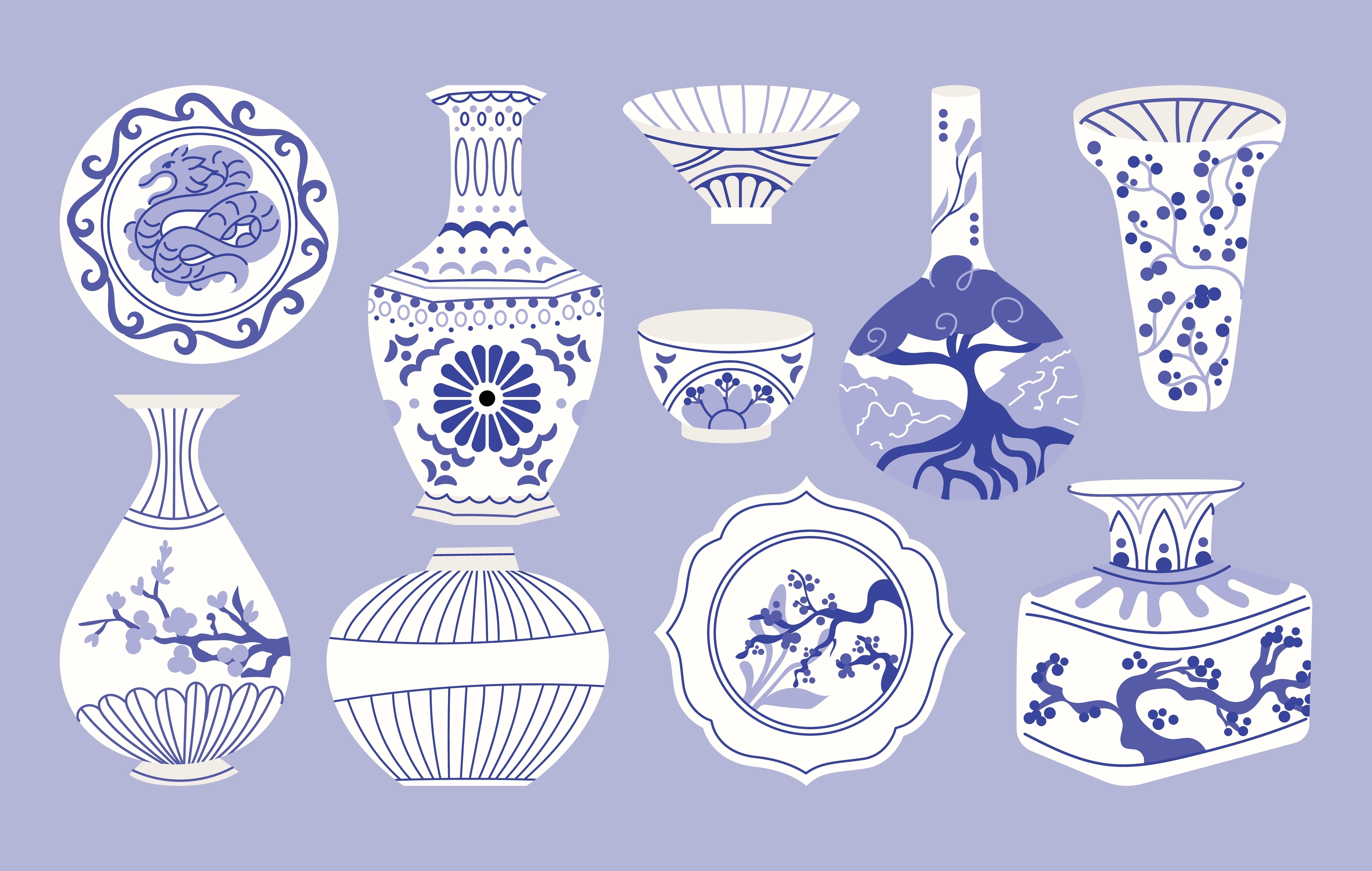
The case of Butler & Anor v Butler & Anor [2016] EWHC 1793 (Ch) provides a pertinent example. The dispute concerned the fate of a 500-piece collection of 17th-century Chinese porcelain from the transitional period between the Ming and Qing dynasties. The collection, valued at £8 million was assembled by Sir Michael Butler, a former aide to Margaret Thatcher. Following his death (and seemingly for some time prior as well), his four children were divided, with the two eldest and the two youngest taking opposing positions over the collection’s future.
Seeking to safeguard his collection from fragmentation, Sir Michael placed the ceramics as assets into a partnership well before his death with a partnership agreement providing that all partners were to refrain from dividing the collection for ten years following his death. The two eldest siblings, Caroline and James, had voiced their wishes to divide the collection and take their shares. They refused to sign the partnership agreement. By contrast, the two youngest siblings, Katherine and Charles, signed the agreement and sought to preserve the collection in recognition of its cultural and scholarly significance. Katherine and Charles were appointed executors of Sir Michael’s estate, and after his death proceedings between the sibling factions were initiated.
Caroline and James, as claimants, sought division of the collection. They proposed the familiar rotational selection process, whereby each sibling would take turns selecting individual pieces. This would convert their joint ownership into absolute ownership of the items chosen. Their application was brought under section 188 of the Law of Property Act 1925 (‘LPA 1925’), which empowers the Court to order division of chattels:
“Where any chattels belong to persons in undivided shares, the persons interested in a moiety or upwards may apply to the court for an order for division of the chattels or any of them, according to a valuation or otherwise, and the court may make such order and give any consequential directions as it thinks fit.”
The defendants, Katherine and Charles, resisted the claim on three principal grounds: first, that the claimants did not hold a moiety or greater interest; secondly, that the collection ought to be preserved intact (for its value and for its cultural significance); and thirdly, in the alternative, that Charles should be permitted to buy out the other siblings’ interests on favourable terms.
The Court ultimately found in favour of the claimants. It held that the claimants did hold a moiety which allowed them to apply under s. 188 LPA 1925. The Court found that the collection was divisible into individual items and that an in specie division by alternating selection was both practicable and unlikely to prejudice the value of the collection as a whole. Moreover, such an order appeared to provide the only viable resolution to the deadlock between the siblings. HHJ Simon Barker QC considered that the academic and cultural significance of the collection could be adequately safeguarded through a careful selection process. The buyout proposal by the Defendants was considered as “insufficiently specific” and would do “nothing to abate the disharmony between the siblings for a further period…”. The ceramics were to be divided and could ultimately be sold.
Just as in divorce cases, here too expert valuation is critical. Proper consideration must be given to provenance, condition, and the current market performance of relevant artists or categories of chattels. In the Butler dispute, both sides instructed expert witnesses to provide opinions on the collection’s value, both collectively and on an item-by-item basis. Over the past decade since the Butler judgment, Katherine Butler has worked to rebuild her father’s collection, including bidding at Christie’s on items sold by her siblings.
No parent intends for decisions about their estate to damage relationships between their children after their death. Careful consideration of the future of a collection is essential, not only for the preservation of the collection itself (if this is desired) but also because thoughtful tax planning can bring significant benefits to one’s estate.
Our firm’s litigation department has extensive experience not only in handling these matters before the courts, but also through alternative dispute resolution methods such as mediation, which can offer creative and flexible solutions.
Stay tuned for the final part of our series next week, where my private client colleague William will explore these potential tax benefits further.
"Sinclair Gibson’s team has the self-belief and the ability to make the bold, difficult advisory decisions others would shy away from. It has a very good team culture, work ethic and consistent delivery."
Chambers HNW 2025