

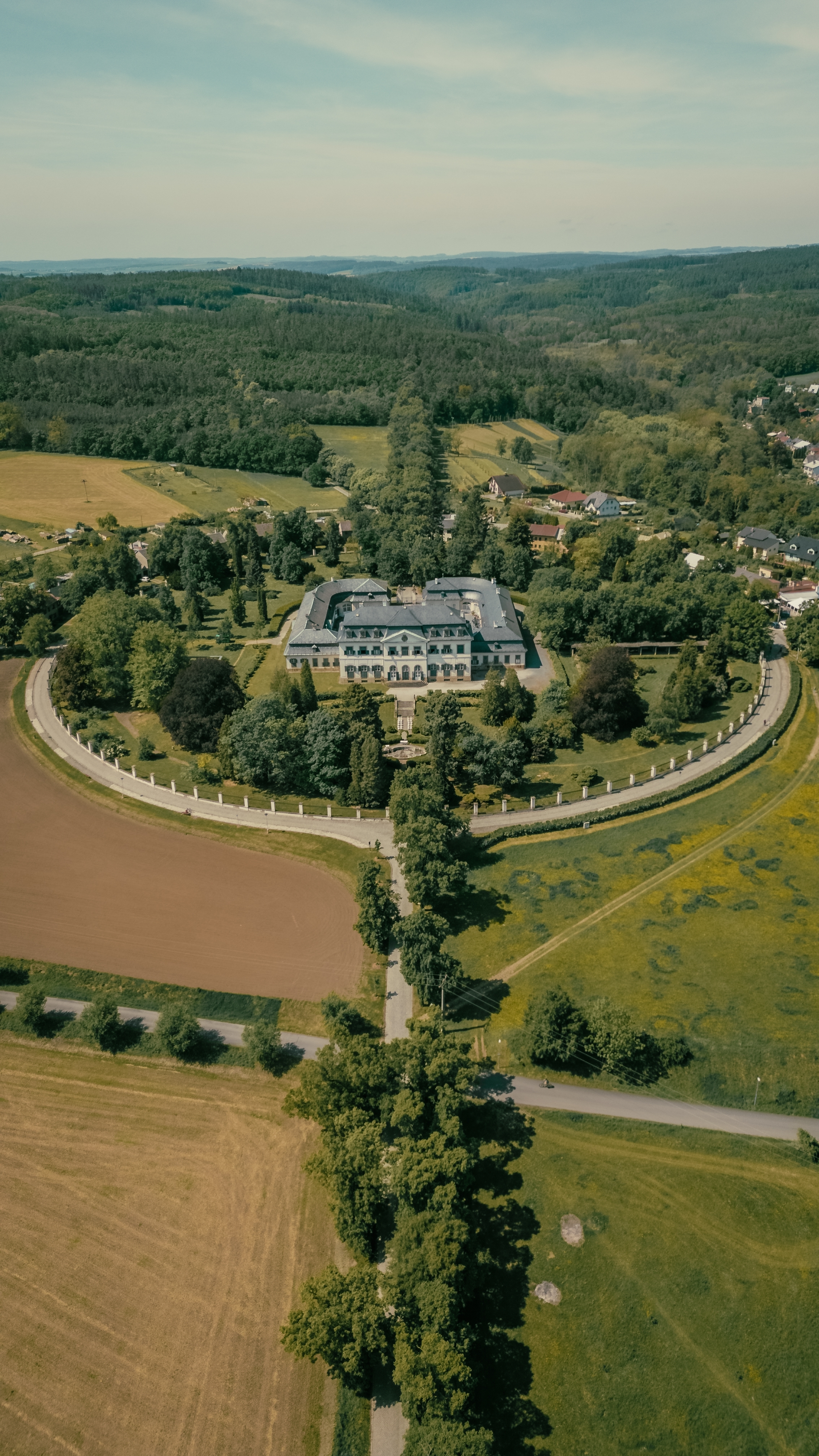
Divorce involving landed estates and dynastic wealth presents a particular set of complex challenges which must be carefully considered. These cases are rarely about the division of liquid assets alone. Instead, they engage questions of inheritance, family expectation, history and long-term stewardship.
Why landed estates are different
Landed estates involve various unique aspects that need to be considered separately from other assets encountered on divorce. By their very nature, these estates are typically inherited and multi-generational, bringing with them strong expectations of preservation and stewardship. They often combine the family home, a working business and inherited wealth all within a single asset, while also being characterised by substantial tied-up capital with limited liquidity. This makes division between the parties, without the sale of assets, particularly challenging.
The difficulty for the court is that it has to balance the competing objectives of achieving fairness between spouses, whilst also trying to avoid the fragmentation of legacy assets and enterprises. This comes with a number of practical challenges:
Liquidity and viability
Estates and farms are often difficult to divide without undermining their viability. Forcing a sale can often threaten the continuation of an estate for the next generations.
Valuation
Accurate valuations are essential but often complex, involving land, business interests, subsidies and sometimes intangible assets.
Third-party interests
It is not uncommon for other family members or complex trust structures to be involved. Disputes may require intervention from third parties or even separate satellite proceedings.
Housing needs
Where the family home is part of the estate, the court must balance housing needs against the practical realities of retaining the land intact.
Ultimately, the court’s task is highly fact-specific and there are a range of outcomes that may be considered. The overriding aim remains fairness both in the short term and long term, which means the court may:
The legal framework
In order to achieve a fair outcome, the court must consider a range of factors including needs, resources and contributions. However, with most landed estate divorce cases, needs remains the dominant principle, particularly where liquidity is limited.
Another central issue is whether wealth is matrimonial (i.e. generated during the marriage and therefore usually shared), or non-matrimonial (e.g. inherited land or pre-marital wealth). Historically, the distinction has been fact-sensitive and sometimes blurred. However, the Supreme Court’s recent decision in Standish v Standish [2025] UKSC 26 has provided some useful clarification. The Supreme Court confirmed that:
In line with Standish, landed estates frequently fall within the category of non-matrimonial property. Therefore, such assets are less likely to be subject to equal sharing, unless they have been clearly treated as joint assets during the marriage, or it is necessary to meet one party’s needs. However, it is important to emphasise that non-matrimonial property is not untouchable. If the available matrimonial assets are insufficient, the court may still have to draw upon inherited wealth to achieve a fair outcome.
Planning ahead
For families with landed wealth, early planning is all the more important. This may include:
As Standish has now demonstrated, contemporaneous evidence of intention can be decisive in determining how assets are treated on divorce. It is therefore important, from the outset of any relationship within landed families, that careful consideration is given as to how assets are structured and how they are intended to be dealt with in the event of a future separation.
How can we help
At Sinclair Gibson, we have extensive experience advising on high-value and complex financial remedy proceedings, including those where wealth is tied up in land, family businesses and multi-generational structures. We work closely with the firm’s private client department, trustees and other professional advisers to achieve outcomes that are both fair and commercially realistic, whilst still seeking to preserve the estates’ legacy.
Should you require our assistance please contact Kathryn Peat, Xanthy Papageorgiou or Lauren Brolly who will be able to advise you further.
"Sinclair Gibson’s team has the self-belief and the ability to make the bold, difficult advisory decisions others would shy away from. It has a very good team culture, work ethic and consistent delivery."
Chambers HNW 2025